You have probably seen margin trading facility as a term if you are actively keeping up with stock market news. Margin trading facility is not only advertised but is often discussed amongst traders on various online forums as well as trading platforms themselves. Initially, a margin trading facility can sound quite technical, leading some traders to believe that it is reserved for more experienced traders.
In reality, a margin trading facility is easier to understand than it sounds. It is simply a way for you to manage how much money you use while placing trades. This article explains everything in a very practical, friendly way. You will understand what a margin trading facility is, how it works, why active traders pay attention to it, and how it connects with a free demat account. Think of this as a clear conversation, not a formal lesson.
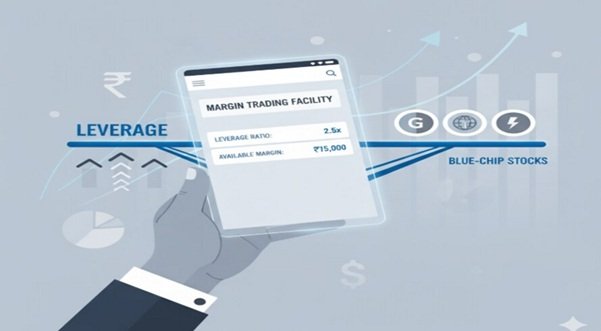
What margin trading facility really means for you
Margin Trading enables you to take a position on selected shares and only put down a portion of the total amount in advance. The broker funds the rest of the amount based on prior, agreed-upon terms with the inventor/trader who trades on margin. Therefore, you will not have to tie up all your cash in every trade to be able to create a hedge by buying short stocks or selling long. Nevertheless, your capital may allow you to take on a larger position than you would have been able to without using margin, provided you have met the margin requirements for that trade.
It is key that you remember that while the funding structure of how you receive your margin may differ, it does not change how you will actually be trading the actual stocks. Therefore, when you trade on margin, you are still trading by buying on the exchange, but rather the arrangement for how you will receive that financing, as opposed to just trading as an ordinary stock market participant.
What Margin Trading Facility Really Means for You
Margin Trading enables you to take a position on selected shares in stock trading and only put down a portion of the total amount in advance. The broker funds the rest of the amount based on prior, agreed-upon terms with the investor/trader who trades on margin. Therefore, you will not have to tie up all your cash in every stock trading transaction and may be able to create a hedge by buying short stocks or selling long.
Your capital may allow you to take on a larger position in stock trading than you would have been able to without using margin, provided you have met the margin requirements for that trade.
It is key to remember that while the funding structure of how you receive your margin may differ, it does not change how you will actually be executing stock trading transactions. When you trade on margin, you are still buying and selling on the exchange, but with a financing arrangement in place rather than trading solely as an ordinary stock market participant.
Why margin trading facility exist in the first place
Markets have different kinds of participants. Some people prefer long-term investing and do not look at prices every day. Others track markets closely and place trades more actively.
Margin trading facility exists to support this active participation. It gives you flexibility in how you deploy your funds while staying within regulatory boundaries.
For you, this facility exists to offer structure and flexibility, not to remove responsibility.
How the margin trading facility works in simple steps
If you decide to use a margin facility, it will be done in a logical sequence. First, you choose from the eligible stocks, then submit your order for that stock using a margin option.
Upon placing your order, you will pay the initial margin, which is a percentage of the total value of the trade. The remainder of the full trade amount is funded by your broker. When the trade has completed, the shares will show in your demat account; however, your broker will retain a pledge on those shares until you repay them the funded amount.
Everything is visible to you; you see your margin position, what you owe to your broker, and your total amount of funding required.
Which stocks can you trade under the margin trading facility
Not all stocks qualify for the margin trade financing facility. Eligibility depends on liquidity, volatility, and regulatory guidelines.
Stocks with higher trading volumes and stable behaviour are more likely to be eligible. Less liquid or highly volatile stocks usually do not qualify.
For you, this means you should always check the eligible stock list before placing a margin trade instead of assuming all shares support it.
How margin and funding affect your position
When you place a margin trade, your contribution is called margin. This margin may come from cash or approved collateral.
The funded portion attracts interest, which accrues for the number of days you hold the position. These charges reflect clearly in your account statements.
For you, separating market movement from funding costs helps you understand what is happening with your trade.
Why do active traders pay attention to the margin trading facility
If you trade actively, you probably monitor prices, charts, and news regularly. For you, capital efficiency matters.
Margin trading facility allows you to allocate your available funds across positions instead of blocking everything in one trade.
This is why you often hear active traders discuss margin trading features. It supports frequent participation while following defined rules.
How margin trading is different from normal trading
Standard trade is a full payment up front. The entire transaction is completed without the use of borrowed funds. Margin trading allows an individual to pay a portion of the total cost of a security to purchase and borrow from the broker the balance.
For the buyer, the primary distinction between standard and margin trades is cash flow and buyer obligations. Although the buyer owns the shares, they are still considered collateral for the margin loan until repayment has been completed.
Understanding pledging in simple words
Pledging often sounds complicated, but it is simply a security mechanism.
When you trade under a margin trading facility, the shares are pledged to the broker. This pledge acts as collateral for the funded amount.
You can still see the shares in your demat account. They are not transferred away. The pledge just marks them as security.
For you, pledging does not mean loss of ownership. It is a technical safeguard.
How market movement impacts margin trades
Price movement affects margin positions more directly. If prices move in your favour, margin levels remain comfortable.
If prices move against your position, margin requirements may increase. You may receive a margin call asking you to add funds or collateral.
For you, this means you need to keep an eye on your positions instead of placing trades and forgetting about them.
Why risk awareness matters even more here
Margin trading facility increases exposure. This means price changes have a bigger impact relative to the money you put in.
This is why understanding risk matters more than focusing on outcomes.
For you, being aware of how exposure works helps you stay grounded and avoid emotional decisions.
Charges and interest you should be aware of
When you use the margin trading facility, the funded portion attracts interest. This interest applies daily and continues until repayment.
Brokerage and statutory charges apply as they do in normal trades.
For you, understanding these charges helps you read your contract notes and statements with clarity.
How a free demat account fits into margin trading
Many platforms offer a free demat account as part of their onboarding process. This removes account opening charges and lowers entry barriers.
Your demat account holds shares bought through the margin trading facility and records pledges clearly.
For you, a free demat account simplifies access while keeping ownership records transparent.
Holding period rules you should know
Margin trading facility usually comes with a defined holding period. You cannot hold positions indefinitely.
At the end of this period, you either repay the funded amount or exit the position.
For you, knowing these timelines in advance avoids last-minute pressure.
How margin trading fits into your daily trading routine
If you trade actively, your day often revolves around market hours.
Margin trading facility becomes part of this routine. You check positions, track margin levels, and stay aware of funding costs.
For you, this explains why margin trading suits those who stay engaged with markets rather than passive participants.
Common misunderstandings you may hear
One common belief is that margin trading guarantees better outcomes. It does not. It only changes exposure.
Another belief is that margin trading removes the need for discipline. In reality, discipline becomes even more important.
For you, clearing these ideas early helps you approach the facility with balance.
Regulatory structure around margin trading in India
Indian regulators define clear rules for the margin trading facility. These rules cover eligibility, margin requirements, disclosures, and reporting.
Brokers must follow these guidelines and present information transparently.
For you, this framework ensures that margin trading operates within well-defined boundaries.
Learning margin trading at your own pace
You do not need to understand everything on day one. Learning happens gradually.
You start by understanding margin, funding, and pledging. Over time, the process becomes familiar.
For you, steady learning works better than rushing into complexity.
Why the margin trading facility is not for everyone
Margin trading facility suits traders who actively monitor positions. It may not suit those who prefer long-term holding without daily attention.
For you, recognising where this facility fits in your own journey matters more than following trends.
Conclusion
Margin trading facility is a structured way for you to manage capital while trading actively. It allows you to take positions by paying a portion upfront while the broker funds the balance under clear rules.
For you as an Indian market participant, understanding the margin trading facility removes confusion and builds confidence. A free demat account supports this by keeping ownership, pledges, and records clear and organised.
When you approach margin trading with awareness, patience, and discipline, it becomes easier to see how active trading tools fit into the broader market. Over time, this understanding helps you engage with the stock market in a more informed and comfortable way.